
Finsphere
Issue 31 | Sep 2026  Your Monthly Guide on Global and Local markets from our Business Head’s Desk.
Markets Caught Between Hope and Uncertainty
Geopolitics, oil prices and rate expectations kept investors cautious through August.

Dear Clients and Stakeholders,
August 2026 was a month defined by the interplay of geopolitics, technology, and monetary policy. Investor sentiment initially improved after US President Donald Trump announced that a planned military strike on Iran had been cancelled in favour of renewed diplomatic efforts. However, optimism remained fragile as conflicting signals from Tehran and repeated setbacks in negotiations kept the future of the Strait of Hormuz uncertain. As a result, oil prices remained volatile, with markets oscillating between hopes of a diplomatic breakthrough and concerns over renewed supply disruptions.
Global equity markets delivered a mixed performance. US equities were supported by resilient economic data and strong earnings from large technology companies, while continued investment in artificial intelligence remained a key market theme. At the same time, investors became more selective as questions emerged around the sustainability of AI-driven spending, intensifying competition, and long-term profitability. Rising oil prices and higher bond yields periodically weighed on risk appetite, resulting in bouts of volatility across global markets.
Monetary policy also remained in focus. At the Jackson Hole Symposium, Federal Reserve Chair Kevin Warsh reiterated the Fed's commitment to price stability while maintaining a data-dependent approach to future interest rate decisions. This reinforced expectations that interest rates could remain elevated for longer than previously anticipated. Combined with ongoing Middle East tensions and uncertainty around global energy supplies, inflation concerns remained a key consideration for investors.
As we move into September, markets remain constructive but cautious. Developments in the Middle East, the trajectory of oil prices, and signals from major central banks will continue to drive market sentiment.
United States
Economic Momentum Cools as the Fed Stays Cautious
The US economy continued to exhibit resilience during August, although signs of moderation emerged across select segments of the economy. Second-quarter GDP growth was confirmed at 1.5%, slowing from 2.1% in the previous quarter, as stronger consumer spending and AI-led business investment were offset by higher imports and weaker government spending. Personal consumption expanded at its fastest pace since Q3CY25, highlighting the continued strength of domestic demand despite an uncertain global backdrop.
Inflation showed further signs of easing during the month, with headline inflation declining to 3.4% in July from 3.5% in June as the impact of the earlier energy shock gradually faded. Producer prices remained unchanged during the month, supported by a decline in energy and gasoline prices. However, underlying inflation remained sticky, with both headline and core PCE inflation holding above the Federal Reserve's target, indicating that price pressures, particularly in the services sector, remain elevated.

Economic activity indicators presented a mixed picture. Manufacturing activity remained in expansion territory for a twelfth consecutive month, while the services sector expanded at its strongest pace in nine months, supported by robust domestic demand and increased business spending. Industrial production also recorded modest growth. However, retail sales contracted by 0.6% in July, marking the first decline since October 2025, while new home sales fell sharply to their lowest level since January, pointing to softer consumer demand and continued weakness in the housing sector.
Labour market conditions remained resilient despite signs of moderating hiring momentum. The unemployment rate declined to 4.1%, although the improvement was partly driven by lower labour force participation. Initial jobless claims remained near multi-decade lows throughout August, underscoring limited layoffs and continued labour market resilience. On the external front, the US trade deficit narrowed to US$73.3 billion in June as imports declined more sharply than exports. Meanwhile, fiscal concerns gained prominence after US government debt surpassed the US$40 trillion mark, while a widening fiscal deficit and elevated Treasury yields raised concerns over long-term fiscal sustainability and borrowing costs.
Overall, the US economy remains supported by resilient consumer demand, robust services activity, and continued business investment. However, moderating growth, persistent underlying inflation, softer labour market indicators, and rising fiscal pressures suggest that the Federal Reserve is likely to maintain a cautious policy stance in the months ahead.

Euro Area and UK
Improving Business Activity Amid Persistent Inflation Pressures
In the Euro Area, economic conditions showed modest improvement during July, supported by a recovery in both manufacturing and services activity. The Manufacturing PMI rose to 51.9, marking the strongest improvement in factory conditions since April, while the Services PMI climbed to a five-month high of 51.7 as lower energy prices during the brief US-Iran truce supported business margins. Industrial production was broadly unchanged in June, with gains in consumer goods and energy output offset by weakness in capital and intermediate goods.
However, consumer demand remained subdued, with retail sales unexpectedly declining 0.3% in June, led by weakness in Germany and France. Inflation accelerated to 2.9% in July from 2.8% in June, driven primarily by higher energy prices following the resumption of hostilities in the Middle East. On the external front, the Euro Area's trade surplus widened to €8.6 billion, supported by strong export growth, particularly in chemicals and manufactured goods.
In the United Kingdom, economic indicators presented a mixed picture, with resilient business activity offset by softer consumer demand and industrial output. The Services PMI returned to expansion territory at 52.1 in July, supported by stronger domestic spending and demand for technology-related services, while manufacturing activity remained in expansion for a ninth consecutive month despite easing to a four-month low of 51.9. Industrial production declined 0.2% in June as weakness in manufacturing outweighed a recovery in mining and energy output. Consumer demand softened, with retail sales falling 0.5% in July after promotional-led spending in previous months.
Inflation accelerated to 2.9%, the highest level in four months, driven by higher household energy costs following an increase in the energy price cap. Meanwhile, the unemployment rate remained unchanged at 4.9% as firms adopted a cautious approach to hiring amid domestic and global uncertainties. The UK's trade deficit also widened to £5.5 billion, reflecting weaker exports to both EU and non-EU markets.
Overall, the European economy remains in a modest growth environment, where improving business activity continues to be offset by uneven consumer demand and persistent inflationary pressures.
Asia
Diverging Growth Trends Amid Weak Domestic Demand and External Support
In China, economic activity showed signs of moderation as policymakers maintained a cautious stance amid slowing domestic demand and ongoing global uncertainties. The People's Bank of China kept its key lending rates unchanged, while inflation eased further to 0.5% in July from 1.0% in June, reflecting weak consumer demand and softer food and energy prices. Industrial production growth slowed to 4.5% year-on-year, while retail sales rose just 0.6%, highlighting continued weakness in household spending.
Labour market conditions also softened, with the urban unemployment rate rising to 5.2%. Despite these challenges, external demand remained supportive, with China's trade surplus widening to US$112.5 billion as exports benefited from strong global demand for semiconductors and AI-related products. Manufacturing activity remained in expansion territory, though both manufacturing and services PMIs softened, indicating a moderation in overall economic momentum.
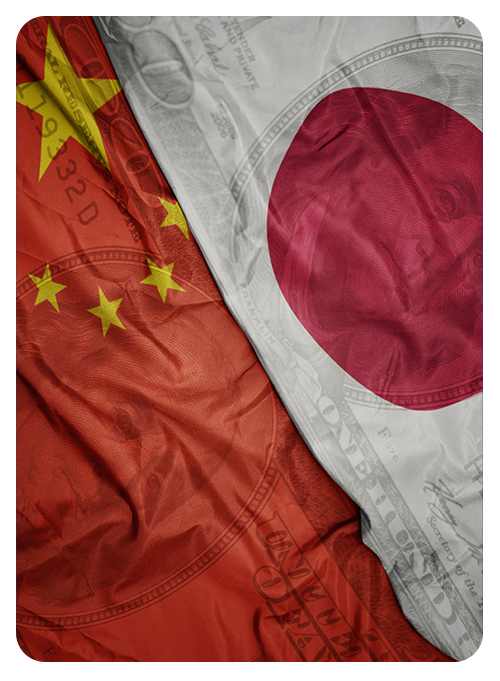
In Japan, economic growth slowed during the second quarter, with GDP expanding at an annualized pace of 1.1%, down from 2.1% in the previous quarter, as softer domestic demand offset strong export growth. Business activity remained relatively robust, with manufacturing supported by AI-related demand and a sharp increase in new orders, while services activity continued to expand despite moderating growth. Inflation accelerated to 1.9% in July, driven by higher energy and consumer prices, while industrial production recorded its strongest growth in five months. Labour market conditions remained stable, with unemployment edging down to 2.4%. However, Japan's trade deficit widened sharply as imports, particularly energy imports, grew faster than exports.
Overall, Asia continues to present a mixed economic picture. China faces slowing domestic demand despite strong export performance and policy support, while Japan benefits from robust manufacturing activity and external demand, though economic growth remains constrained by weak consumption and rising cost pressures.

India
Resilient Growth Amid Rising Inflation and External Headwinds
India's economy remained resilient during August, supported by strong domestic activity and improving investment flows despite global uncertainties and higher energy prices. The RBI kept the repo rate unchanged at 5.25% for a fourth consecutive meeting while maintaining a neutral stance. Reflecting confidence in the domestic economy, the central bank revised its FY27 GDP growth forecast upward to 6.7%, while marginally lowering its inflation projections. Inflation, however, edged higher to 4.45% in July, driven by food, transportation, and energy-related pressures linked to the Middle East conflict and rupee weakness.
Economic activity remained robust despite some moderation. Industrial production grew 6.7% year-on-year in July, while core sector growth eased to 5.4%. Business activity softened modestly, with both manufacturing and services PMIs declining from the previous month amid weaker domestic demand. However, export orders remained strong, supporting overall business sentiment. Labour market conditions improved during the month, with the unemployment rate falling to 5.1% from 5.5% in June, supported by higher labour force participation and stronger employment growth.
On the external front, India's trade deficit widened to US$32 billion as higher oil and commodity prices pushed imports to record levels. Nevertheless, exports recorded robust growth across petroleum products, electronics, and engineering goods, while positive net FDI inflows and strong tax collections highlighted the continued resilience of economic activity.
Overall, while higher energy prices and external uncertainties pose risks, India remains supported by strong domestic demand, healthy industrial growth, and improving labour market conditions.
Conclusion
The global economy continues to navigate a challenging environment marked by moderating growth, persistent inflationary pressures, and elevated geopolitical uncertainty. While inflation has eased from recent peaks across several major economies, volatility in energy markets linked to the ongoing US-Iran conflict and disruptions around the Strait of Hormuz continue to pose risks to the global inflation outlook. In response, major central banks have maintained a cautious and data-dependent approach, reinforcing expectations of a higher-for-longer interest rate environment.
Despite these headwinds, economic activity remains broadly resilient. The United States continues to benefit from strong consumer spending and business investment, Europe is witnessing early signs of stabilization through improving business activity, and India remains among the fastest-growing major economies, supported by healthy domestic demand and industrial activity. In Asia, however, growth trends remain mixed, with China facing weaker domestic demand despite strong exports, while Japan benefits from robust manufacturing activity and external demand. Looking ahead, developments in the Middle East, the path of energy prices, and central bank policy decisions will remain key drivers of growth, inflation, and market sentiment.
At Chola Securities, we remain steadfast in our commitment to helping you navigate these complexities with clarity and foresight. As always, we aim to align your investments with evolving opportunities while ensuring resilience against emerging headwinds.
We sincerely thank you, our valued clients and investors for your continued confidence and partnership. Together, we look forward to embracing the challenges and opportunities of the months ahead, ensuring sustained growth and success.
Regards,
N Senthilkumarh
President, Chola Securities